
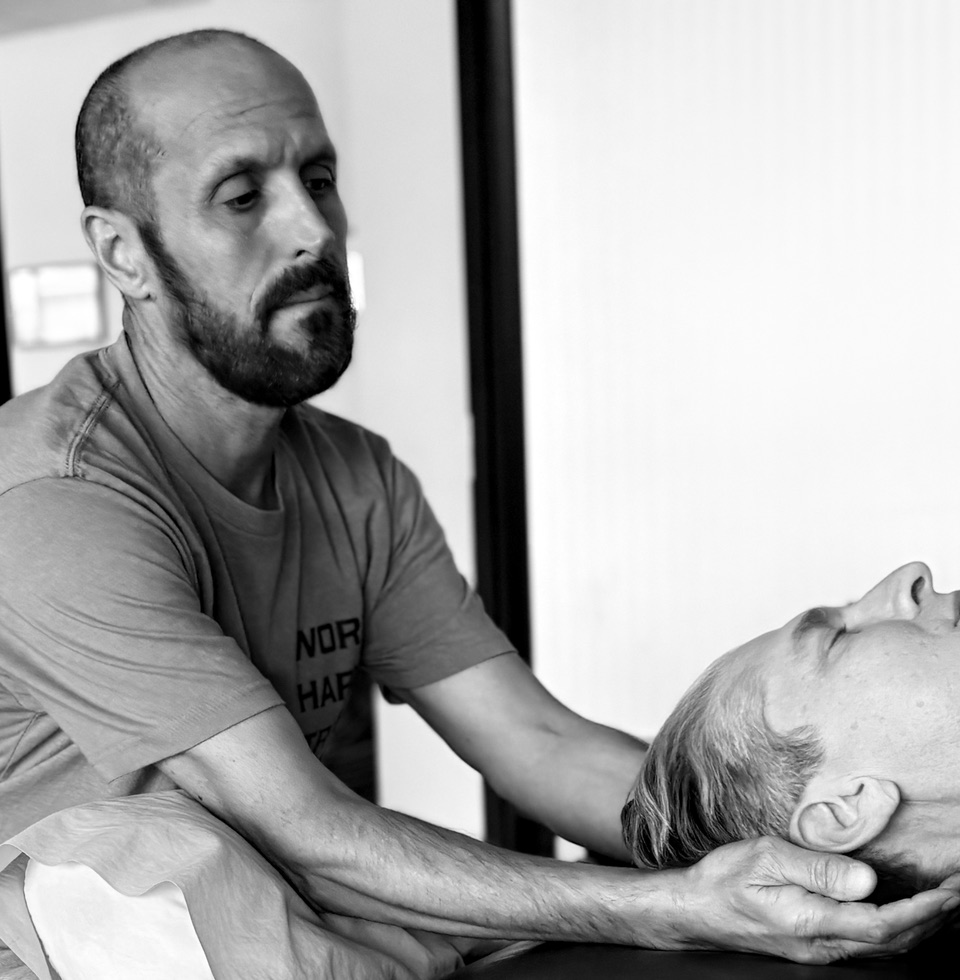
When I first became familiar with Jeanne Hills and Feldenkrais work, it got my attention because it addressed something I knew many complicated patients needed: sophisticated movement retraining without forcing the body.
The movements can look almost too simple from the outside. They are often slow and deliberate. But that is the point.
When you slow movement down, you begin to notice things you miss at normal speed. Where are you bracing? Which direction feels effortless and which feels threatening? Are you moving through the hip or borrowing motion from the back? Are you holding your breath? Can you accomplish the same task with less unnecessary tension?
That kind of awareness gives the nervous system information.
For me, Feldenkrais became a natural partner to the Bonacci Method. I often think of my role as reducing negative strain and irritation—deprogramming the system. Movement work can then help the patient explore a better pattern—reprogramming.
I do not want a patient to feel wonderful on the treatment table and then immediately return to the same movement strategy that helped create the problem. I want the change to have somewhere to go.
Not every patient needs the same type of movement work, and Feldenkrais is not a magic answer. It is a tool. But for the right person, it can be a very intelligent way to reconnect awareness and motion.
If you are curious about how hands-on treatment and movement retraining can work together, ask us about the way we integrate them.
–Marc Bonacci, DC, PMMTP
