
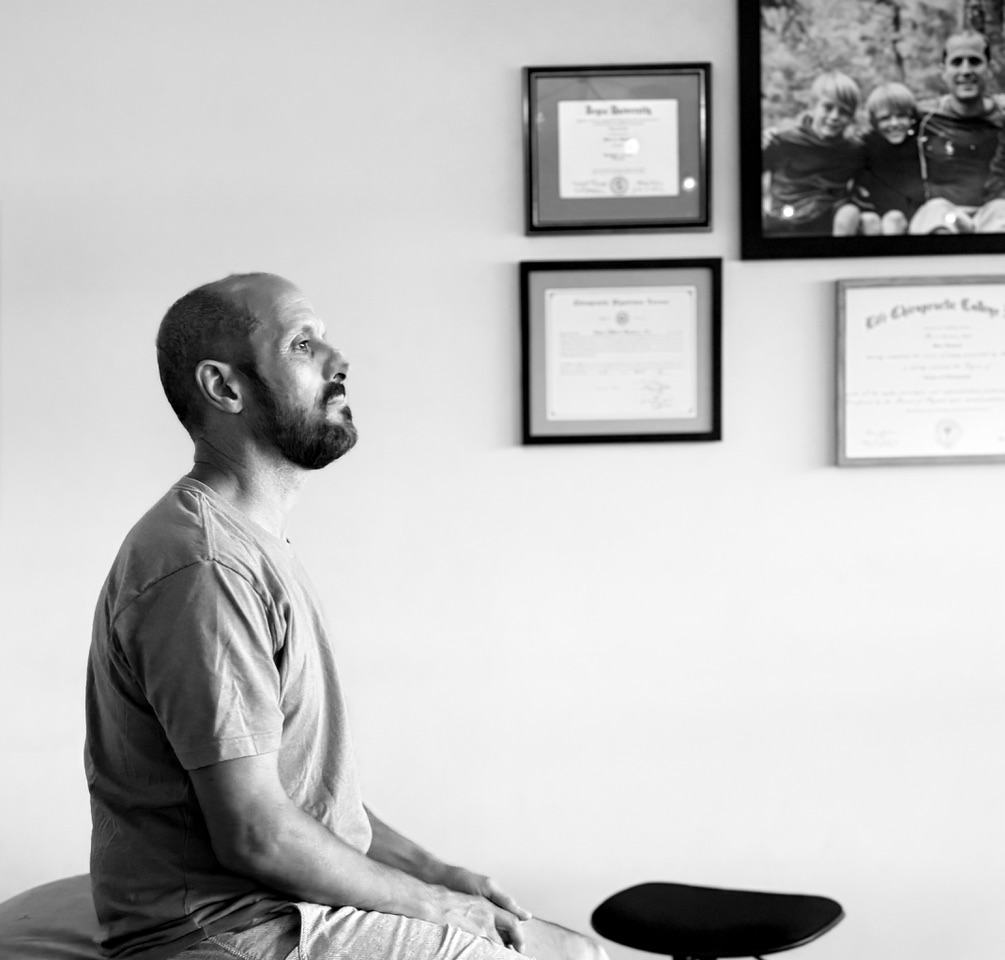
 One of the things that has kept me interested in practice all these years is that the body does not always behave the way the textbook says it should.
I can have a patient come in with a complaint that sounds completely muscular or joint-related. Based on my training, I may have a pretty good idea where I expect the problem to be. But then I examine the patient, follow the system I have developed over the years, and find that the body is telling me something different. Sometimes addressing tension or irritation involving the nervous system changes a complaint that, on paper, did not look neurological at all.
Those moments still get my attention. I developed the Bonacci Method, but the method continues to teach me. I think that is important. The minute a doctor becomes more committed to his theory than to what the patient is actually showing him, he stops listening.
I use imaging. I value medical diagnoses. I respect what we know from anatomy and science. But I also believe the patient in front of me gets the final vote. How does the body respond? What changes the motion? What reduces the irritation? What happens when we address one relationship instead of another?
Good clinical work requires knowledge, but it also requires curiosity. Sometimes the most useful thing I can do is set aside what I expected to find and pay attention to what is actually there.
If you have been treating the same problem the same way without getting where you want to go, it may be time to ask a different question. Give us a call and let’s take a fresh look.
If given the proper atmosphere, the body will heal.
–Marc Bonacci, DC, PMMTP
